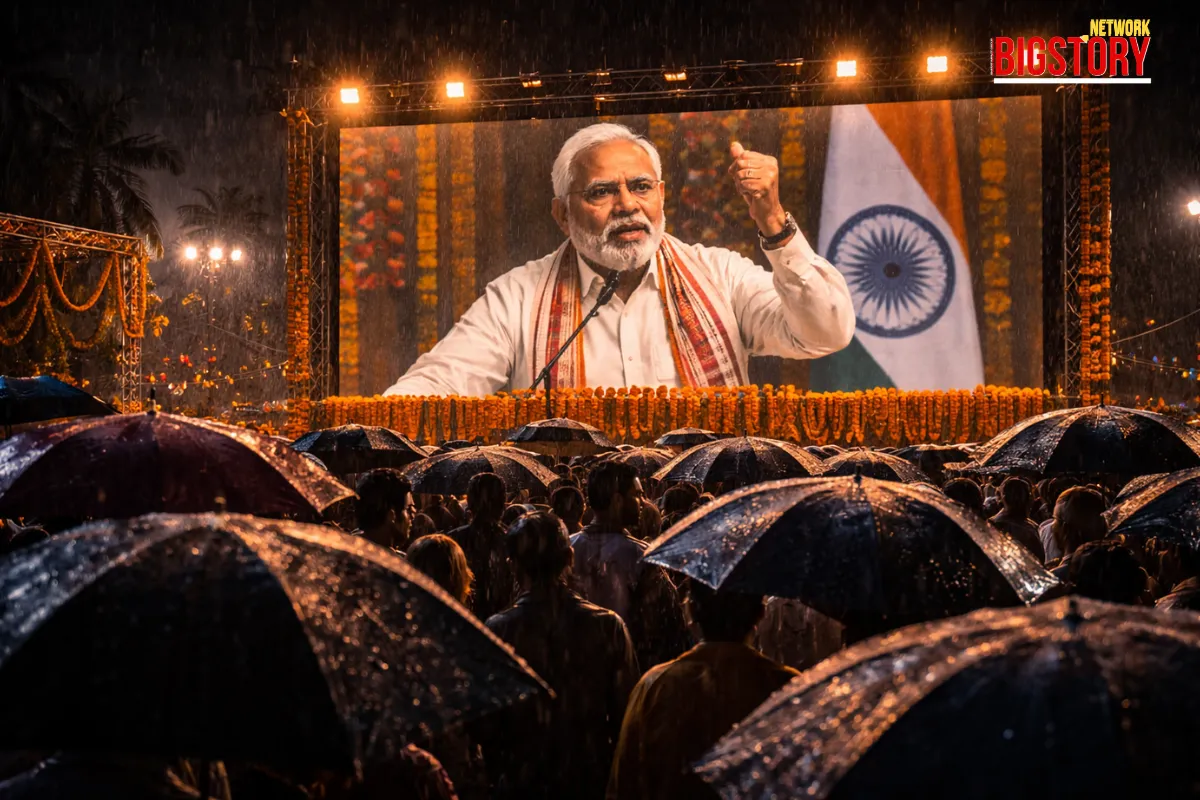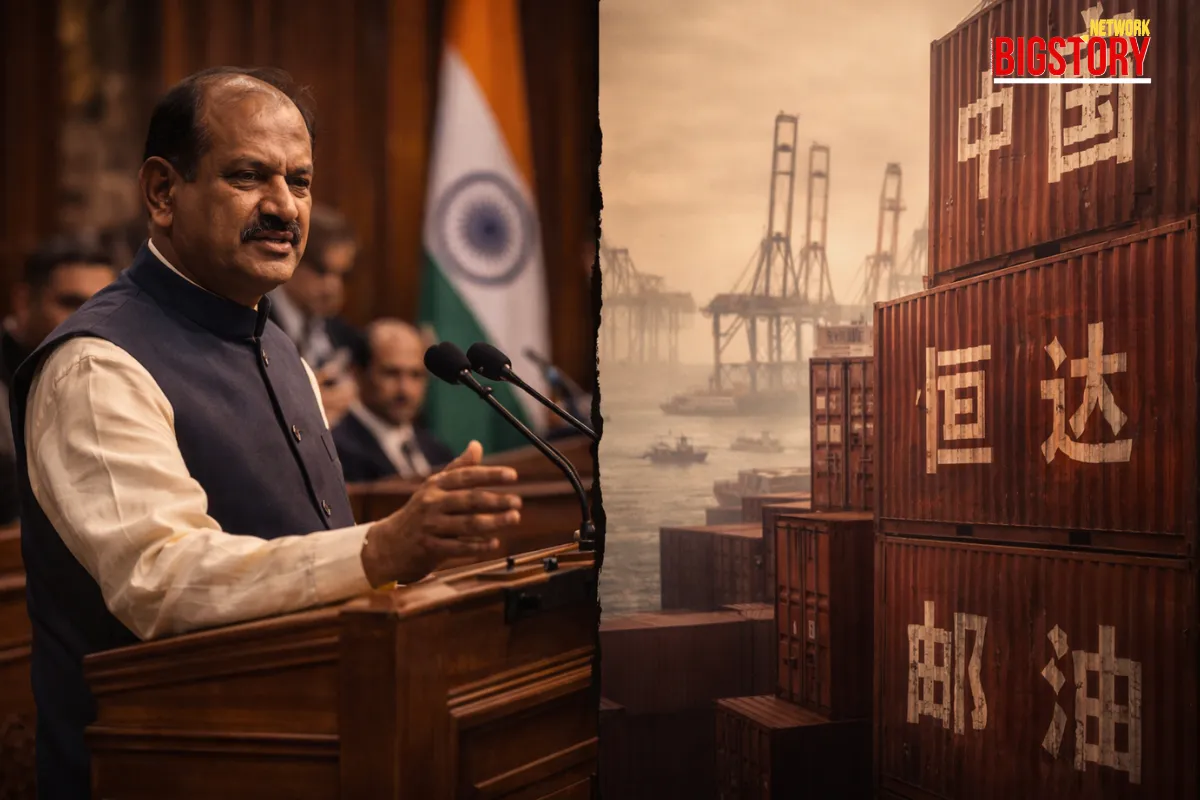
Despite public assurances of a "formidable buffer," the Centre's emergency gas rationing has quietly strangled domestic production, forcing New Delhi to seek a massive agricultural bailout from its biggest rival.
 Brajesh Mishra
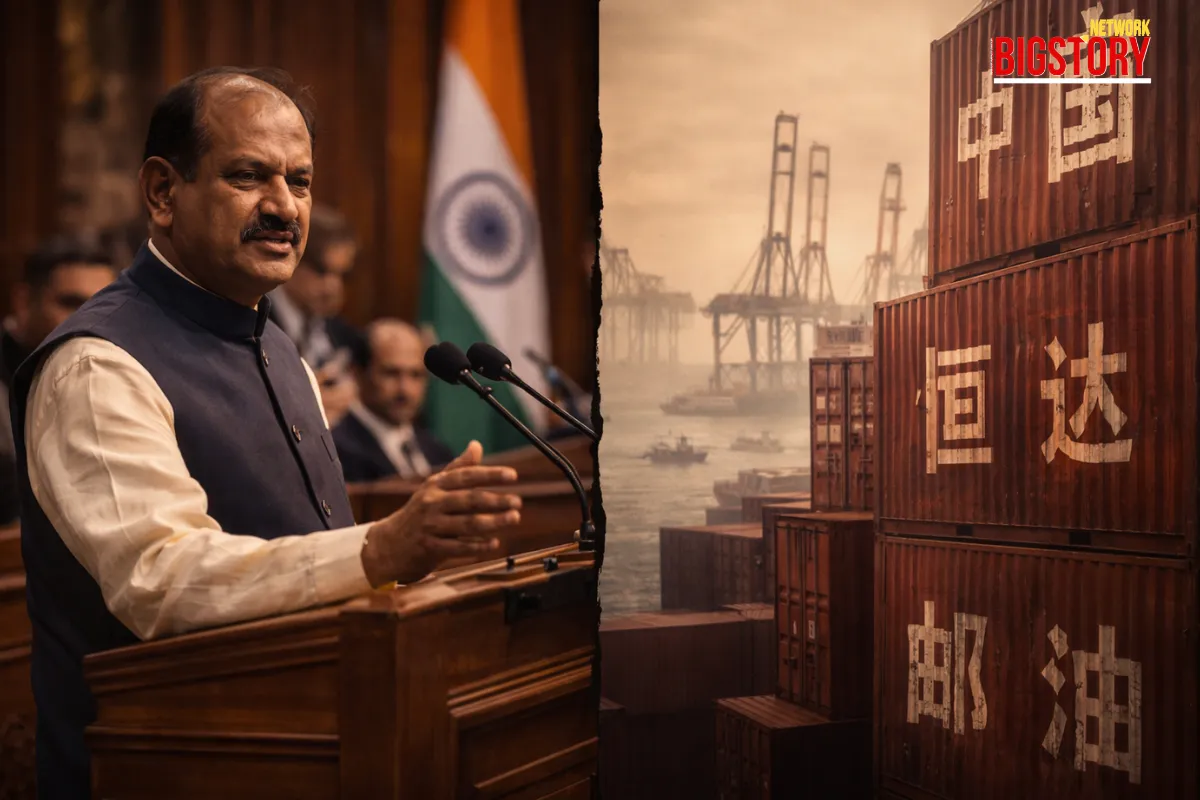
What happened: Union Minister J.P. Nadda assured Parliament there is no fertilizer shortage, but leaked reports show India is secretly asking China for emergency urea shipments.
Why it happened: The Middle East war has blocked LNG imports, forcing the Indian government to ration natural gas and cut feedstock to domestic fertilizer plants by 30%.
The strategic play: The government is projecting total control and boasting about a 177 LMT buffer stock domestically, while quietly scrambling to secure agricultural lifelines from a major geopolitical rival. India's stake: If China refuses to ease its export quotas, India faces a severe fertilizer deficit ahead of the crucial Kharif monsoon season, which would trigger massive food inflation.
The deciding question: Will Beijing use its dominance over the global urea market to extract geopolitical concessions from a desperate New Delhi?
A glaring, high-stakes contradiction at the highest levels of the Indian government has exposed the severe agricultural fallout of the 2026 Middle East energy crisis. On Friday, Union Minister J.P. Nadda confidently assured Parliament that India faces "no shortage" of chemical fertilizers. Yet, international reports have simultaneously revealed that New Delhi is quietly pleading with China to ease its strict export restrictions and release emergency urea cargoes.
This back-channel diplomatic scramble betrays the reality on the ground: the domestic gas crisis is forcing local fertilizer plants to drastically trim production. While the Centre boasts of an insulated domestic supply, the nation's 46 percent agrarian workforce is staring down the barrel of a massive Kharif season crisis if Beijing refuses to play ball.
J.P. Nadda, Union Minister for Chemicals and Fertilizers Nadda delivered the confident parliamentary address asserting that India's inventory is entirely secure. He deliberately bypassed the massive logistical hurdles currently strangling domestic plants, projecting an image of unshakeable self-reliance to calm domestic markets.
Ministry of Commerce, China The Chinese government authority exercises near-total control over the global urea market through a strict export quota system. Beijing has not yet allocated its outbound shipment allowances for 2026, leaving India's emergency requests—and its food security—hanging precariously in the balance.
Indian Fertilizer Manufacturers (IFFCO, GNFC) Domestic urea producers find themselves caught in the crossfire. Because the government prioritized household gas, distributors like GAIL severely restricted critical LNG feedstock to these plants, silently forcing India's most efficient manufacturers to run at heavily reduced capacities.
Domestic state broadcasters are predictably amplifying the government's press releases, focusing exclusively on the 177 LMT buffer stock and the "record availability" of farming resources. This shallow framing ignores the stark reality of India’s profound vulnerability and the resulting geopolitical humiliation.
The domestic natural gas rationing order—designed to save the urban middle class from an LPG shortage—has quietly strangled India's own urea plants. To make up for this rapidly accelerating production shortfall before the critical June monsoon sowing season, New Delhi is forced to knock on the door of its biggest geopolitical rival. The "adequate provisions" that the government is so proudly boasting about actually hinge entirely on whether Beijing decides to generously lift its export quotas. Global benchmark prices for urea have already jumped 21 percent in the first week of the Middle East conflict; India is not insulated, it is currently negotiating from a position of absolute weakness.
If India truly has a "formidable buffer" of 177 lakh tonnes of fertilizer, why is the government secretly asking its greatest geopolitical adversary for an emergency bailout?
News & Wire Coverage:
Official Statements & Data:
 Exclusive Content






Sign up for the Daily newsletter to get your biggest stories, handpicked for you each day.


 Trending Now! in last 24hrs